 US Site
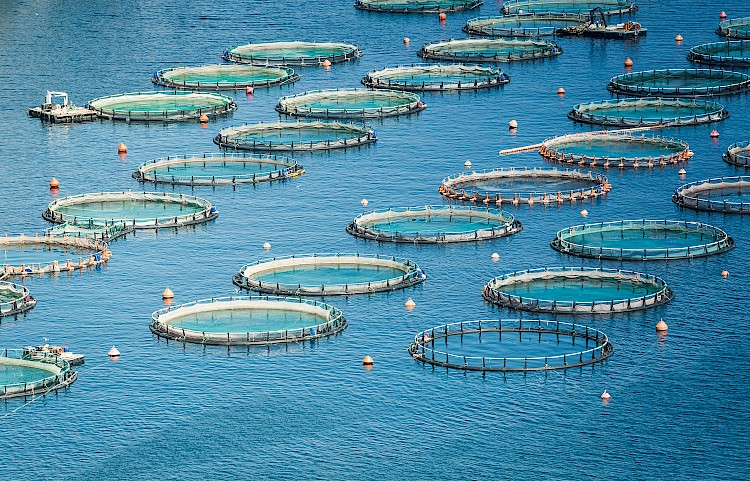
Why UK Fish Farms Are Switching from Chemicals to UV-C

Victory Lighting
Fish farming is one of the most water-intensive industries in the UK. Whether it's a Scottish salmon hatchery, an inland trout farm in the West Country, or a recirculating aquaculture system (RAS) producing species year-round in a controlled environment, the quality of the water is everything. It directly determines whether the fish stay healthy, grow efficiently, and reach market in good condition.
For decades, chemical treatments have been the primary tool for managing that water quality — disinfecting incoming supplies, controlling bacterial and viral loads, treating disease outbreaks. But the industry is changing, and UV-C technology is increasingly the reason why.
Why chemical water treatment is a growing problem for UK aquaculture
Chemical treatment in fish farming has always been a balancing act. The compounds used to kill pathogens — chlorine, hydrogen peroxide, peracetic acid, organophosphates and others — are effective, but they don't discriminate well. Residual chemicals in the water affect fish health, stress stock, and in some cases accumulate in fish tissue. Discharge into surrounding waterways raises serious environmental concerns and is increasingly subject to regulatory scrutiny.
Antibiotics present a more complex problem still. The prolonged use of antibiotics in aquaculture increases selective pressure on bacterial populations, driving resistance — and residual antibiotics can remain in farmed fish at the point of sale. The UK's Responsible Use of Medicines in Agriculture Alliance (RUMA) has been driving the aquaculture sector toward lower antibiotic use for years, and progress has been made. But reducing antibiotic dependency requires replacing it with something effective.
The regulatory and commercial direction of travel is unambiguous: the industry needs to reduce its reliance on chemical treatment, not simply manage it better.
How UV-C water treatment works in fish farming: pathogen control without chemicals
UV-C water treatment works by exposing water to germicidal ultraviolet light as it passes through an inline treatment system. The UV-C radiation disrupts the DNA of microorganisms — bacteria, viruses, parasites, algae, moulds and their spores — preventing them from reproducing and rendering them inactive.
The process leaves nothing behind. No chemical residues, no disinfection by-products, no impact on water chemistry or the biological balance of the system. The water emerges naturally disinfected, with its mineral profile, pH and oxygen levels untouched.
For aquaculture, that matters enormously. UV systems destroy up to 99.9% of bacteria, viruses and parasites in the water, significantly reducing the risk of diseases that are one of the primary causes of financial losses in fish farming. And they do so without introducing any chemical stress to the fish or the ecosystem.
Where UV-C is used in fish farming and aquaculture: incoming water, RAS systems, hatcheries and egg disinfection
Incoming water treatment is the most fundamental application. Whether a farm draws from a river, a borehole or a mains supply, incoming water carries microbial risk. UV-C treatment installed inline at the point of entry eliminates that risk before the water reaches the fish — a first line of biosecurity that chemical dosing struggles to replicate consistently without affecting water quality.
Recirculating aquaculture systems (RAS) represent the most technically demanding application, and the one where UV-C delivers perhaps its greatest value. RAS facilities recirculate the same water continuously through biological filtration, mechanical separation and disinfection steps. UV-C sterilisers are a core component of the disinfection stage, maintaining pathogen-free conditions across the recirculated volume without the accumulation of chemical residues that would occur with repeated chemical treatment of the same water.
Hatcheries are particularly high-risk environments. At the start of their lifecycle, juvenile fish and eggs are especially sensitive and susceptible to disease outbreaks. UV-C treatment of hatchery water is an established biosecurity measure, protecting vulnerable stock at the most critical stage of production.
Egg disinfection is a specific application in salmonid hatcheries, where waterborne transmission of viral pathogens between generations is a known risk. UV-C treated water in the egg incubation stage breaks that transmission pathway without the chemical handling and residue risks associated with alternative treatments.
The operational benefits of UV-C water treatment for fish farms: mortality, antibiotics and compliance
Beyond pathogen control, UV-C treatment delivers a set of operational benefits that matter to a fish farm's bottom line.
Reduced fish mortality
Healthier water means healthier fish. By controlling pathogens continuously rather than reactively, UV-C systems reduce the disease outbreaks that lead to stock losses. Healthier stock delivers better feed conversion ratios and shorter production cycles.
Lower antibiotic dependency
When incoming water and the recirculating system are kept consistently clean, the conditions that require antibiotic intervention arise less frequently. UV-C doesn't replace veterinary treatment when disease occurs, but it meaningfully reduces how often that treatment is needed.
Environmental compliance
With no chemical discharge to manage, UV-C treated farms have a simpler environmental footprint. There are no treatment chemical residues entering watercourses — an increasingly important factor as UK environmental regulation tightens around aquaculture discharge.
Operational simplicity
UV-C systems require minimal maintenance. The primary ongoing requirement is periodic lamp replacement, typically once a year. There are no chemical deliveries, no storage requirements, no handling protocols and no waste disposal costs.
Why RAS depend on UV-C water sterilisation
Recirculating aquaculture systems are growing in significance for the UK industry — particularly for Atlantic salmon production, where land-based RAS is increasingly seen as a sustainable alternative to sea pen farming. In a RAS, water quality isn't just a fish health issue: it's the entire basis of the production model. The ability to sterilise and control the water with UV-C is one of the core reasons RAS can produce at high density without the disease pressure that characterises net pen environments.
As the UK's RAS sector grows — in salmon, trout, seabass, shrimp and other species — UV-C water treatment is growing with it.
Victory Lighting: UV-C lamps for aquaculture and fish farm water treatment systems
Water quality is the foundation of everything in fish farming, including stock health, feed conversion, production cycle length, environmental compliance, and ultimately the quality of what reaches the market. UV-C treatment keeps that foundation solid, without the chemical overhead, the residue risk, or the regulatory exposure that comes with traditional treatment programmes.
Getting the lamp specification right — wavelength, intensity, reactor geometry, flow rate — is where the difference between a UV-C system that performs and one that doesn't is made. Flow rate, reactor geometry, target pathogens, replacement cycle — these are the variables that determine whether your system delivers the log reduction your biosecurity programme requires.
We supply UV-C lamps for the water treatment systems used across aquaculture and fish farming applications in the UK. Our UV-C lamp technology used in inline water treatment for RAS, hatcheries, processing facilities and fresh produce operations. If you're specifying a new system or maintaining an existing one, we're happy to help with the lamp side.
Talk to our team about UV-C for your aquaculture operation
You can also browse our full UVC range and download the Aquaculture brochure.
Ready to discuss specific products or a custom solution?